How it works
From first sketch to your site.
One point of contact. Three photo approvals. An insured journey and a clear plan for setting the piece.

How it works
A commission. A clear path.
Your place, in view.
Send us a photo of the site — free rendering in 48 hours.
The design. The price.
Approve the design and delivered price; reserve your commission. Card deposits up to $5,000; the balance by wire.
The first approval.
Approve the model or shop drawing. The proportions, details and dimensions are agreed before the finished piece takes shape.
Every detail, seen.
Approve finished photos, then crate photos. The balance is due by wire before your piece travels.
From the curb to its place.
Delivered insured to your curb with anchor drawings, pad specification, a step-by-step install guide, a video walkthrough and a live call with our technician while it is set. Installation crew available on request.
The making
From material to presence.
I
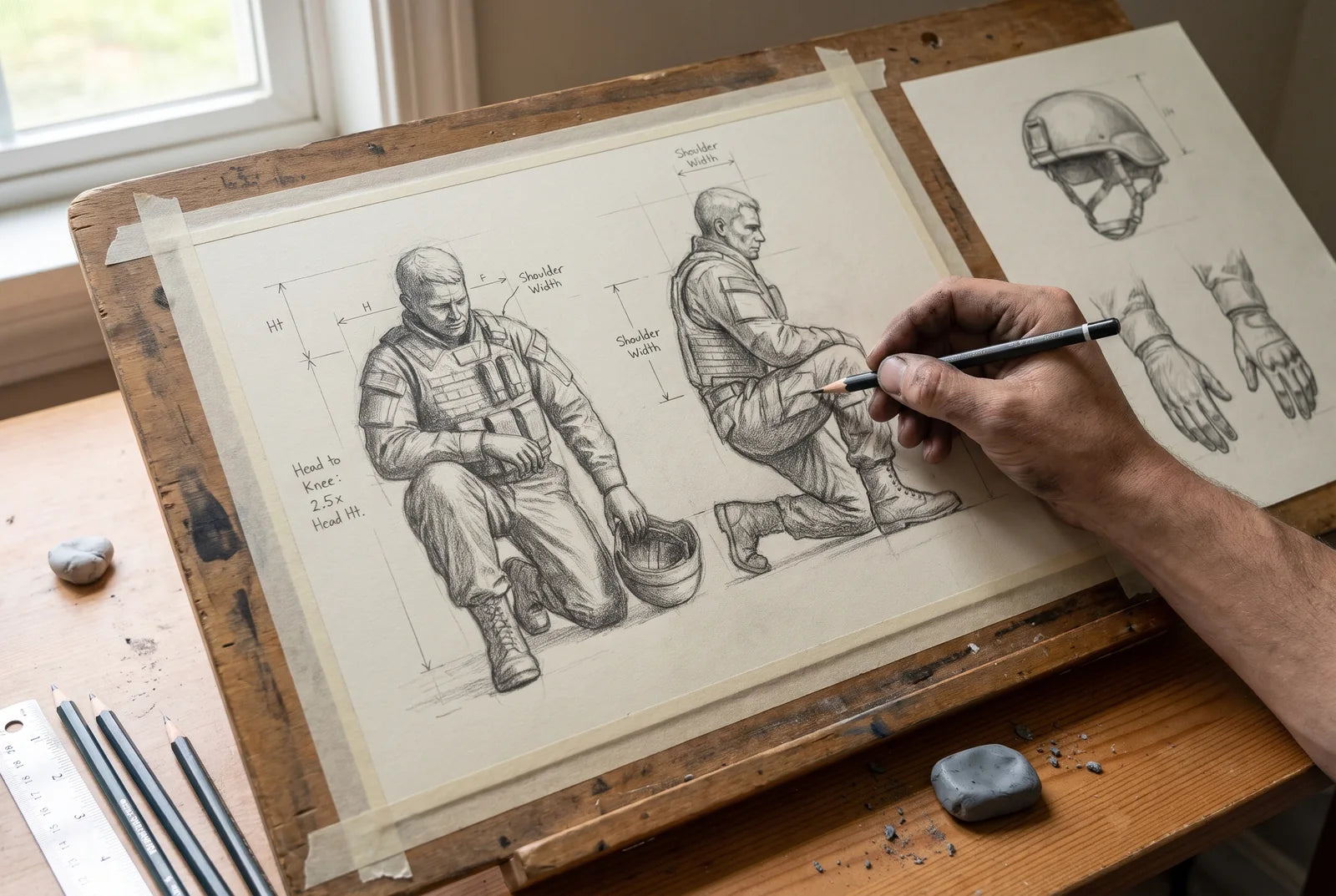
Drawn with you
A drawing first, then a 3D model you can turn. Proportions, details and dimensions are agreed before anything is made.

II
The model
Approval I. You see the model or shop drawing and confirm the proportions, the details and the direction of the work.


III
Bronze
Lost-wax casting: the model becomes a mold, the mold is filled with molten bronze, and the casting is welded, chased and patinated by hand.


IV
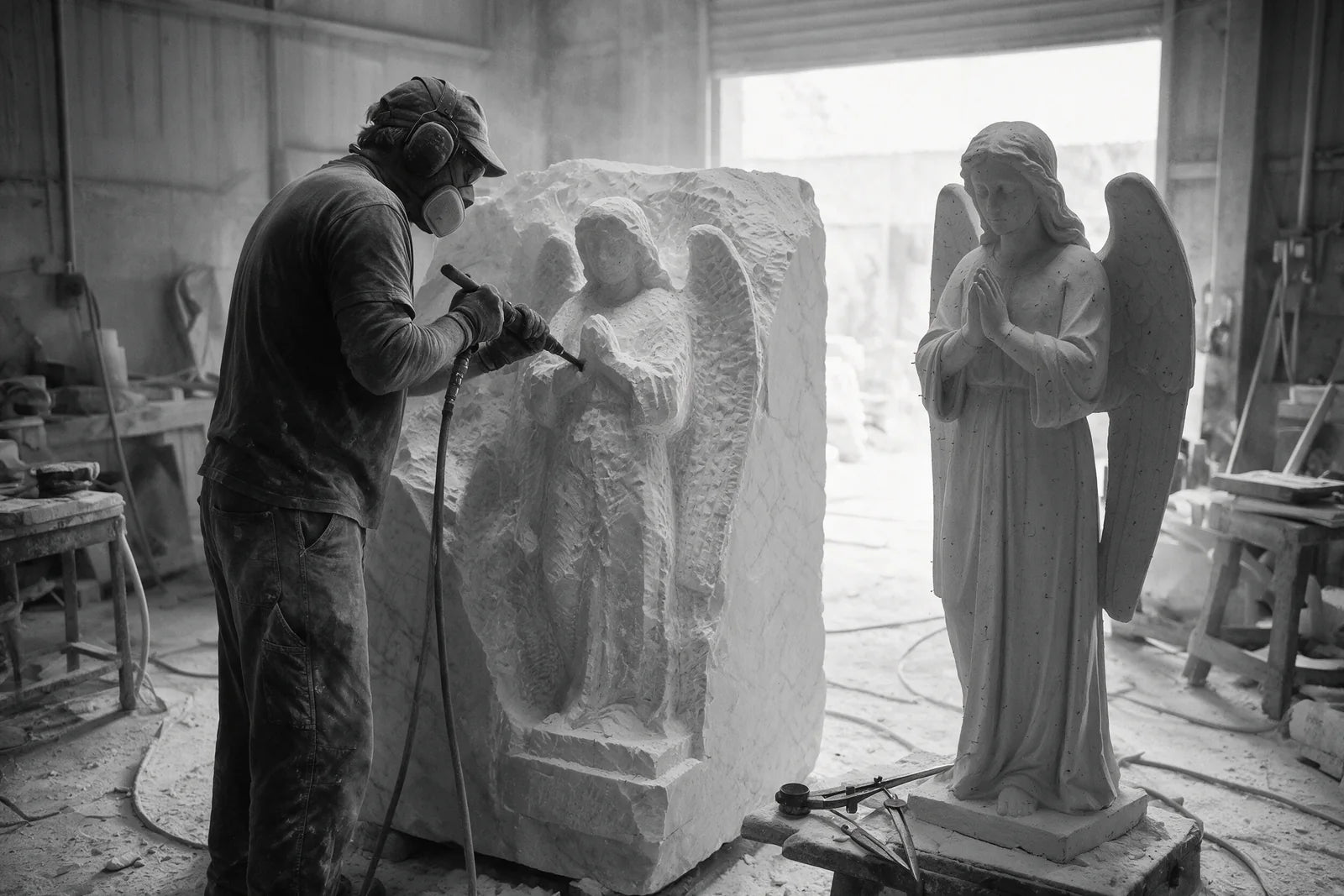
Stone
A block is chosen for the piece, roughed out against the full-size model and finished by hand with ever finer tools.


V
Steel
Stainless is cut, formed, welded and polished.


VI
Finished and crated
Approvals II and III: photographs of the finished piece, then of the piece in its crate. The balance is due by wire before it travels.


VII
At any scale
The same process at any size, from a portrait bust to a monumental figure for a public square.

See it before it travels.
Your commission has three photo-approval stages: the model or shop drawing, the finished piece before crating, and the packed crate before shipment. You receive one-to-one updates through production. A rendering is a design illustration; it is not a photograph of a completed installation or a substitute for the approved specification.
Allow 90–150 days
Our starting planning window is 90–150 days. Your written proposal gives the current production and freight schedule for the selected piece. Design changes, approval timing, component availability and site readiness can change that schedule. Tell us about a dedication or opening date at the first conversation so we can check feasibility before you commission.
Confirm the details
Catalog dimensions describe a starting design. Final dimensions, crated weight, materials, finish, base and anchoring, and any pump or lighting details are established in your proposal and approval drawings. Do not construct a pad or arrange lifting equipment from a concept rendering.